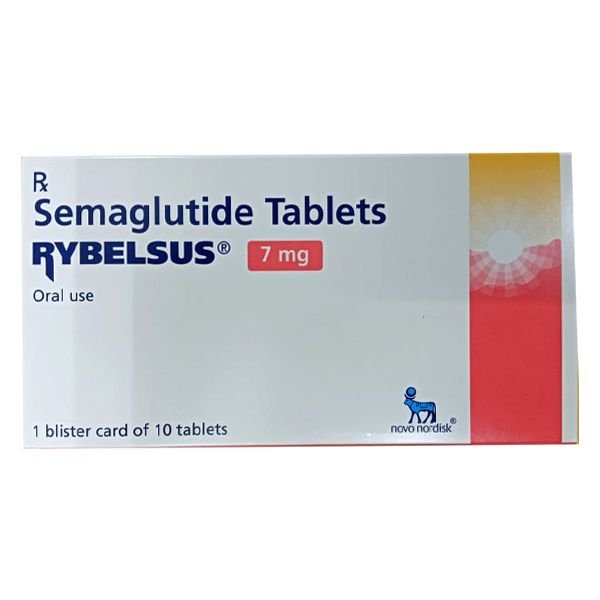
Pharmaceutical Semaglutide Tablets 7mg x 10
$99.99
Description
Classification
Pharmaceutical Semaglutide Tablets 7mg x 10 refers to an oral semaglutide product containing 7mg per tablet, supplied as a pack of 10 tablets.
Semaglutide belongs to the glucagon-like peptide-1 (GLP-1) receptor agonist class. Oral semaglutide is used medically to improve blood-glucose control in adults with type 2 diabetes, alongside diet and exercise. Current FDA labeling also includes reduction of major cardiovascular events in certain adults with type 2 diabetes who are at high cardiovascular risk.
The 7mg strength is a recognized oral semaglutide tablet strength in the current FDA labeling for Rybelsus.
- Product: Semaglutide tablets
- Active ingredient: Semaglutide
- Strength: 7mg per tablet
- Quantity: 10 tablets
- Category: GLP-1 receptor agonist
- Form: Oral tablet
- Primary medical use: Type 2 diabetes management
- Route: Oral
What Is Pharmaceutical Semaglutide Tablets 7mg x 10?
Semaglutide is a GLP-1 receptor agonist that mimics the activity of the naturally occurring hormone GLP-1. It influences blood-glucose regulation, appetite-related signaling, and gastrointestinal processes.
The 7mg oral strength is associated with Rybelsus, an FDA-approved oral semaglutide product. Current FDA labeling lists Rybelsus tablet strengths of 3mg, 7mg, and 14mg.
The x10 specification indicates that the package contains 10 tablets.
It is important to distinguish an approved semaglutide medicine from products merely described as “pharmaceutical semaglutide.” The exact manufacturer, formulation, strength, and regulatory authorization should always be verified.
Dosage
7mg is the strength of each tablet, not necessarily the starting dose.
For the current FDA-labeled Rybelsus regimen, treatment begins with 3mg once daily for the first 30 days. After that, the dosage is increased to 7mg once daily. If additional glycemic control is required after an appropriate period, the dose may be increased to 14mg once daily.
The 3mg starting dose is intended for treatment initiation and is not considered effective for glycemic control in the current labeling.
For proper administration, the tablet should be taken:
- Once daily.
- In the morning.
- On an empty stomach.
- With no more than 4 ounces of plain water.
- At least 30 minutes before food, other beverages, or oral medicines.
- Whole, without crushing, splitting, or chewing.
Do not use the 7mg strength as a self-directed starting dose without appropriate medical advice.
How Does Semaglutide Work?
Semaglutide activates GLP-1 receptors.
This produces several physiological effects relevant to glucose control. Semaglutide enhances glucose-dependent insulin secretion and reduces inappropriate glucagon secretion. It also slows gastric emptying and can influence appetite and food intake.
Together, these actions can improve blood-glucose control and contribute to reduced calorie intake and weight reduction in some patients.
The effects are glucose-dependent, meaning the insulin-related action is stronger when blood glucose is elevated.
Potential Benefits
When appropriately prescribed, oral semaglutide may provide several therapeutic benefits.
These can include:
- Improved blood-glucose control in adults with type 2 diabetes.
- Reduction in HbA1c.
- Support for improved metabolic control alongside diet and exercise.
- Reduced appetite in some patients.
- Weight reduction in some individuals.
- Cardiovascular risk reduction in certain adults with type 2 diabetes and elevated cardiovascular risk under the current FDA indication.
The response varies between individuals and depends on factors such as baseline glucose levels, diet, other medicines, treatment duration, and adherence.
Semaglutide should not be promoted simply as a general-purpose weight-loss supplement.
When Should You Use Semaglutide?
Semaglutide tablets should be used when prescribed for an appropriate medical indication.
For Rybelsus, the FDA-approved indication is to improve glycemic control in adults with type 2 diabetes mellitus as an adjunct to diet and exercise. The current labeling also includes reduction of major adverse cardiovascular events in certain adults with type 2 diabetes who are at high cardiovascular risk.
Correct administration is particularly important because food, beverages, and other oral medicines can affect absorption.
The tablet should be taken in the morning on an empty stomach with a small amount of plain water, followed by a waiting period of at least 30 minutes before eating, drinking, or taking other oral medicines.
When Should You Not Use Semaglutide?
Semaglutide tablets are contraindicated in people with a personal or family history of medullary thyroid carcinoma (MTC) or in patients with Multiple Endocrine Neoplasia syndrome type 2 (MEN 2). They are also contraindicated following a previous serious hypersensitivity reaction to semaglutide or an ingredient in the formulation.
Additional medical caution is required for people with:
- A history or symptoms of pancreatitis.
- Severe gastrointestinal disease.
- Diabetic retinopathy.
- Kidney problems, particularly where dehydration may occur.
- Gallbladder disease.
- Concurrent insulin or insulin-secretagogue treatment.
Semaglutide is not indicated for type 1 diabetes under the current Rybelsus labeling.
Mechanism of Action
Semaglutide is structurally related to human GLP-1 and acts as a GLP-1 receptor agonist.
Its activity can be summarized as:
GLP-1 receptor activation → glucose-dependent insulin response + reduced glucagon signaling → improved glucose control
It also affects gastrointestinal function by delaying gastric emptying and influences appetite-related pathways in the central nervous system.
Because semaglutide acts through several interconnected metabolic pathways, its effects extend beyond simply lowering blood glucose.
Uses
Oral semaglutide is medically used for appropriate patients with type 2 diabetes mellitus.
Current FDA labeling indicates use:
- Alongside diet and exercise to improve glycemic control.
- To reduce the risk of major adverse cardiovascular events in certain adults with type 2 diabetes and high cardiovascular risk.
It should not be represented as an approved treatment for:
- Type 1 diabetes.
- General bodybuilding.
- Athletic performance enhancement.
- Rapid cosmetic weight loss without medical assessment.
- Increasing testosterone.
- Treating ordinary fatigue.
People seeking semaglutide specifically for weight management should use a formulation and indication that are appropriately authorized for that purpose in their jurisdiction.
Warnings and Precautions
Semaglutide carries a boxed warning concerning thyroid C-cell tumors. Animal studies demonstrated thyroid C-cell tumors, while the relevance of this finding to humans remains unknown. Because of this risk, semaglutide tablets are contraindicated in patients with personal or family history of MTC or MEN 2.
Other important warnings include:
- Acute pancreatitis.
- Diabetic retinopathy complications in susceptible patients.
- Hypoglycemia, particularly when used with insulin or insulin secretagogues.
- Acute kidney injury related to volume depletion.
- Severe gastrointestinal adverse reactions.
- Acute gallbladder disease.
- Risk associated with aspiration during general anesthesia or deep sedation in appropriate circumstances.
Persistent severe abdominal pain, significant dehydration, or other serious symptoms should receive prompt medical attention.
Side Effects
Common adverse effects of oral semaglutide are primarily gastrointestinal.
They may include:
- Nausea.
- Abdominal pain.
- Diarrhea.
- Reduced appetite.
- Vomiting.
- Constipation.
Some patients may also experience fatigue, dyspepsia, or other gastrointestinal symptoms.
More serious potential complications include:
- Pancreatitis.
- Gallbladder problems.
- Severe dehydration.
- Kidney injury.
- Hypoglycemia when combined with certain diabetes medicines.
- Diabetic retinopathy complications in susceptible patients.
- Serious hypersensitivity reactions.
The likelihood and severity of side effects can vary according to dose, treatment duration, underlying conditions, and concomitant medicines.
Storage
Store semaglutide tablets according to the specific manufacturer’s instructions.
Keep the product:
- In its original packaging.
- Protected from excessive heat and moisture.
- Away from direct light where specified.
- Out of reach of children.
- With batch and expiration information intact.
Do not use tablets if the packaging is damaged, improperly sealed, or the product’s authenticity cannot be established.
Because semaglutide is a prescription medicine, maintaining the original packaging is also useful for confirming the exact formulation, strength, manufacturer, and expiration date.
Where to Buy Pharmaceutical Semaglutide Tablets 7mg x 10?
To get Pharmaceutical Semaglutide Tablets 7mg x 10 online, go to USA Elite Steroid, today to get the best deal on this medicine .
Frequently Asked Questions
1. What is Pharmaceutical Semaglutide Tablets 7mg x 10?
It is a product described as containing 7mg of semaglutide per tablet, supplied in a pack of 10 tablets. The exact manufacturer and regulatory status should be verified.
2. Is 7mg a recognized oral semaglutide strength?
Yes. Current FDA labeling for Rybelsus identifies 3mg, 7mg, and 14mg tablet strengths.
3. Is 7mg the starting dose of semaglutide tablets?
No. For the current Rybelsus regimen, treatment begins at 3mg once daily for 30 days, followed by 7mg once daily.
4. How should a 7mg semaglutide tablet be taken?
For Rybelsus, it is taken once daily in the morning on an empty stomach with no more than 4 ounces of plain water, followed by at least 30 minutes before food, beverages, or other oral medicines.
5. Who should not take oral semaglutide?
People with a personal or family history of medullary thyroid carcinoma, MEN 2, or a previous serious hypersensitivity reaction to semaglutide or its ingredients should not use it. Other medical conditions may also require careful assessment before treatment.