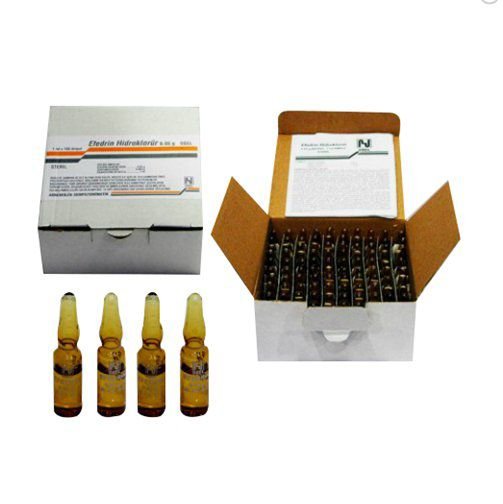
Pharmaceutical Ephedrine Amples 50mg x 1ml x 100
$199.99
Available on backorder
Description
Classification
Pharmaceutical Ephedrine 50mg x 1ml x 100 refers to an injectable ephedrine sulfate presentation. Ephedrine is a sympathomimetic amine that acts on adrenergic receptors and is used medically as a vasopressor to treat clinically significant hypotension occurring in the setting of anesthesia. U.S. labeling identifies ephedrine sulfate injection as a prescription product for intravenous use.
The 50mg x 1ml x 100 specification indicates 50mg of ephedrine sulfate in each 1ml ampoule or single-dose container, with a total quantity of 100 units. Note that some U.S. approved presentations are supplied as 1ml single-dose vials rather than ampoules, so the exact container type should be verified from the product label.
- Product: Pharmaceutical Ephedrine
- Active ingredient: Ephedrine sulfate
- Listed strength: 50mg per 1ml
- Individual volume: 1ml
- Quantity: 100 units
- Category: Sympathomimetic / vasopressor
- Route: Intravenous for U.S.-approved injection products
- Presentation: 100 individual units
- U.S. consideration: Prescription medication; verify exact product and regulatory status
What Is Pharmaceutical Ephedrine 50mg x 1ml x 100?
Pharmaceutical Ephedrine 50mg x 1ml x 100 is a concentrated injectable ephedrine sulfate presentation. Current U.S. labeling for ephedrine sulfate injection identifies a strength of 50mg/ml ephedrine sulfate, equivalent to approximately 38mg/ml of ephedrine base. The product is supplied as a sterile, clear solution for intravenous use and is labeled for professional medical administration.
The 100-unit configuration makes this a large-quantity professional presentation, but the quantity does not establish an appropriate patient dose or authorize use outside the product’s approved medical indications.
Dosage
Because injectable ephedrine is a potent cardiovascular medicine, dosing should be determined and administered by qualified healthcare professionals according to the approved labeling and the patient’s clinical response. It would be inappropriate to provide a self-administration schedule for a 50mg/ml injectable product.
The U.S. label specifies that ephedrine sulfate injection is 50mg/ml and must be diluted for intravenous administration.
- Do not self-inject this product.
- Do not convert the 50mg/ml concentration into a personal dosing regimen.
- Administration should follow professional medical protocols.
- Verify the concentration before preparation.
- Discard unused portions of single-dose containers as directed by labeling.
How Does Pharmaceutical Ephedrine Work?
Ephedrine is a sympathomimetic agent that increases adrenergic activity. It can stimulate alpha- and beta-adrenergic receptors and increase the release of norepinephrine, producing effects such as increased vascular tone and cardiovascular stimulation.
These actions can raise blood pressure when ephedrine is appropriately used as a vasopressor for hypotension associated with anesthesia. U.S. labeling specifically describes its ability to increase systolic and mean blood pressure in this clinical setting.
Benefits
The established medical benefit of injectable ephedrine is its ability to help restore blood pressure in appropriate patients experiencing hypotension during anesthesia. It is not appropriately marketed as a general energy, weight-loss, or athletic-performance product.
Potential therapeutic characteristics include:
- Increasing vascular tone.
- Supporting blood-pressure restoration.
- Increasing adrenergic activity.
- Supporting cardiovascular response during anesthesia-related hypotension.
- Providing a rapid-acting vasopressor option under professional supervision.
When Should You Take Pharmaceutical Ephedrine 50mg x 1ml x 100?
Injectable ephedrine is not intended for routine self-directed use. U.S. labeling identifies the injection for intravenous administration in the treatment of clinically important hypotension occurring in the setting of anesthesia.
Administration should therefore occur in an appropriate clinical environment where blood pressure and cardiovascular status can be monitored.
When Should You Not Take Pharmaceutical Ephedrine 50mg x 1ml x 100?
Ephedrine can substantially affect blood pressure and heart rate, making medical assessment important before administration. The current U.S. label lists no absolute contraindications, but it contains important warnings and precautions regarding cardiovascular effects and drug interactions.
Professional evaluation is especially important for patients with:
- Cardiovascular disease.
- Hypertension.
- Significant arrhythmias.
- Thyroid disorders.
- Diabetes.
- Other conditions affected by sympathomimetic medicines.
- Concurrent medications that increase blood pressure or heart rate.
What Is the Mechanism of Pharmaceutical Ephedrine?
Ephedrine produces sympathomimetic effects through direct and indirect adrenergic activity. It stimulates adrenergic receptors and promotes norepinephrine release, increasing sympathetic nervous-system activity.
The resulting physiological effects can include increased vascular resistance, increased blood pressure, and cardiovascular stimulation. Repeated administration may also result in tachyphylaxis and tolerance, a warning specifically identified in U.S. prescribing information.
Uses of Pharmaceutical Ephedrine 50mg x 1ml x 100
The established U.S. medical use of injectable ephedrine sulfate is treatment of clinically important hypotension occurring during anesthesia.
For an accurate U.S.-focused product page, it should not be promoted as an approved treatment for:
- Weight loss.
- Fat burning.
- Athletic performance.
- Bodybuilding.
- Energy enhancement.
- General wellness.
- Routine nasal congestion when using an injectable formulation.
Warnings and Precautions for Pharmaceutical Ephedrine 50mg x 1ml x 100
Ephedrine has significant cardiovascular effects and should be administered by trained medical professionals. The U.S. prescribing information warns that its pressor effects can be potentiated when used with certain oxytocic drugs, potentially producing serious postpartum hypertension. Repeated administration can also lead to tolerance.
Important considerations include:
- Monitor blood pressure and cardiovascular response.
- Review all current medications.
- Consider potential drug interactions.
- Use only the specified route of administration.
- Ensure appropriate dilution when required by the product label.
- Do not reuse single-dose containers.
- Keep unused units securely stored.
Side Effects of Pharmaceutical Ephedrine 50mg x 1ml x 100
Because ephedrine stimulates the sympathetic nervous system, potential adverse effects can include increased blood pressure, rapid heartbeat, palpitations, nervousness, tremor, headache, nausea, and difficulty sleeping.
Excessive cardiovascular stimulation can be serious. Patients receiving injectable ephedrine should be monitored by qualified medical personnel, particularly because the medicine is intended for use in acute clinical situations.
Storage for Pharmaceutical Ephedrine 50mg x 1ml x 100
Current U.S. ephedrine sulfate injection labeling generally specifies storage at 20°C to 25°C (68°F to 77°F), with permitted excursions between 15°C and 30°C (59°F and 86°F), and recommends keeping the product in its carton until use. Single-dose containers should not be reused and unused portions should be discarded.
Maintain:
- Original packaging.
- Lot or batch number.
- Expiration date.
- Manufacturer information.
- Appropriate storage conditions.
- Product documentation.
Where to Buy Pharmaceutical Ephedrine 50mg x 1ml x 100?
To get Pharmaceutical Ephedrine 50mg x 1ml x 100 online, go to USA Elite Steroids today to get the best deal on this medicine
Frequently Asked Questions
1. What is Pharmaceutical Ephedrine 50mg x 1ml x 100?
It is a 100-unit injectable presentation with each 1ml unit containing a stated 50mg of ephedrine sulfate. U.S. ephedrine sulfate injection products are prescription medicines used as vasopressors in specific clinical settings.
2. What is ephedrine injection used for?
FDA-approved ephedrine sulfate injection is used to treat clinically important hypotension occurring in the setting of anesthesia.
3. Does 50mg mean the patient should receive 50mg?
No. 50mg/ml describes the concentration, not an individualized patient dose. Administration should be determined by qualified medical professionals.
4. Can ephedrine injection be used for weight loss?
Injectable ephedrine sulfate should not be marketed as an FDA-approved weight-loss treatment. Its established injectable use is as a vasopressor for anesthesia-associated hypotension.
5. Is 50mg x 1ml x 100 a bulk product?
Yes, in terms of quantity, this is a 100-unit presentation: each unit contains 1ml, and there are 100 individual units. It is a professional large-quantity package rather than one 100ml container.