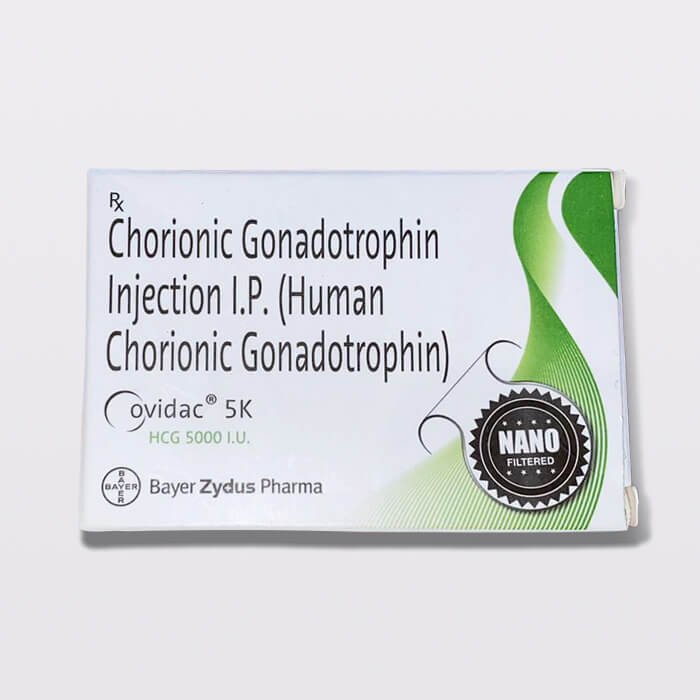
Pharmaceutical HCG 5000iu
£39.99
Description
Classification
Human Chorionic Gonadotropin (hCG) is a prescription gonadotropin hormone used in specific medical settings. It has activity similar to luteinizing hormone (LH) and can stimulate the testes to produce testosterone and support sperm production in appropriately selected male patients. In women, hCG can be used in fertility treatment to trigger ovulation under specialist supervision.
Unlike many experimental hormone products, hCG is an established pharmaceutical substance. However, approved indications, formulations, and labeling can vary by country.
What Is Pharmaceutical HCG 5000 IU?
Pharmaceutical HCG 5000 IU refers to a formulation containing 5,000 international units (IU) of human chorionic gonadotropin. hCG is a glycoprotein hormone naturally produced during pregnancy and has biological activity similar to LH.
Prescription hCG products may be supplied as a powder requiring reconstitution before administration. The exact formulation and preparation instructions should always be checked against the official product information supplied with the medicine.
Dosage
There is no single universal hCG dosage because treatment depends on the medical indication, patient’s age, sex, reproductive status, and clinical response.
Depending on the condition, clinicians may use hCG for:
- Selected male hypogonadism conditions
- Certain cases of undescended testes in boys
- Assisted reproductive treatment
- Ovulation induction in appropriately evaluated women
hCG should be administered only according to a healthcare professional’s prescription. Do not use a 5,000-IU vial as though the entire vial represents a single standard dose.
How Does Pharmaceutical HCG 5000 IU Work?
hCG acts primarily by binding to LH/hCG receptors. In males, stimulation of these receptors in the testes can promote testosterone production and support spermatogenesis when the underlying hormonal pathway is responsive.
In fertility treatment, hCG can provide an LH-like signal that helps trigger final maturation and ovulation after appropriate ovarian stimulation.
Because hCG directly affects reproductive hormone pathways, medical supervision and appropriate laboratory or clinical monitoring are important.
Benefits
The potential benefits of hCG depend entirely on the medical condition being treated. When appropriately prescribed, hCG may help restore or stimulate reproductive functions that depend on LH-like signalling.
Potential therapeutic objectives include:
- Supporting testosterone production in selected male patients
- Supporting sperm production when clinically appropriate
- Stimulating ovulation during fertility treatment
- Supporting treatment of certain reproductive endocrine disorders
These medical applications should not be confused with using hCG as a general bodybuilding or weight-loss product.
When Should You Take Pharmaceutical HCG 5000 IU?
The timing of hCG treatment depends on the prescribed indication.
For fertility treatment, administration is carefully timed in relation to ovarian stimulation and monitoring. For male hormonal treatment, schedules are individualized according to the underlying diagnosis and treatment response.
Patients should follow their prescription exactly and should not alter the timing or frequency without speaking with their healthcare professional.
When Should You Not Take Pharmaceutical HCG 5000 IU?
hCG is not suitable for everyone. A healthcare professional should review medical history before treatment.
Particular caution or avoidance may apply to people with:
- Certain hormone-dependent cancers
- Uncontrolled thyroid or adrenal disorders
- Pregnancy when hCG is being used for a non-pregnancy-related indication
- Unexplained abnormal genital bleeding
- Certain ovarian cysts or ovarian enlargement
- Known hypersensitivity to hCG or formulation ingredients
Women receiving fertility treatment require appropriate monitoring because ovarian stimulation can result in ovarian enlargement and, in some circumstances, ovarian hyperstimulation syndrome.
What Is the Mechanism of Pharmaceutical HCG 5000 IU?
hCG has a similar biological action to luteinizing hormone. It binds to LH/hCG receptors, particularly in reproductive tissues.
In males, receptor stimulation activates testicular Leydig cells and promotes testosterone production. Continued stimulation can also support processes involved in sperm development when the appropriate physiological conditions are present.
In women, hCG provides an LH-like signal that can induce final follicular maturation and ovulation during appropriately monitored fertility treatment.
Uses of Pharmaceutical HCG 5000 IU
The clinical uses of hCG depend on the particular formulation and regulatory approval in the relevant country. Medical applications can include:
- Treatment of selected cases of male hypogonadism
- Stimulation of testosterone production
- Support of spermatogenesis in selected patients
- Treatment of certain cases of cryptorchidism in boys
- Ovulation induction during fertility treatment
hCG should not be promoted as an FDA-approved treatment for bodybuilding, routine fat loss, or cosmetic weight reduction. FDA-approved hCG labeling specifically distinguishes its medical indications from weight-loss claims.
Warnings and Precautions
hCG significantly affects reproductive hormone signalling, so inappropriate use can lead to hormonal complications.
Important precautions include:
- Use hCG only under qualified medical supervision.
- Follow the supplied reconstitution and administration instructions.
- Do not use an improperly stored or contaminated preparation.
- Inform your doctor about all hormonal medicines and fertility treatments.
- Attend recommended laboratory and clinical monitoring.
- Report severe abdominal or pelvic pain promptly during fertility treatment.
In men, inappropriate or excessive hCG use can contribute to hormonal imbalance, breast enlargement, fluid retention, and other androgen-related effects.
Side Effects of Pharmaceutical HCG 5000 IU
Possible side effects depend on the patient and treatment indication. Reported effects may include:
- Headache
- Fatigue
- Mood changes
- Injection-site reactions
- Breast tenderness or enlargement
- Fluid retention
- Headache or irritability
In women undergoing fertility treatment, hCG can contribute to ovarian hyperstimulation syndrome (OHSS), which can become serious. Symptoms such as significant abdominal swelling or pain, rapid weight gain, vomiting, or breathing difficulty require prompt medical attention.
Serious allergic reactions are uncommon but require urgent medical care if they occur.
Storage for Pharmaceutical HCG 5000 IU
Storage requirements vary according to the specific hCG formulation. Unreconstituted and reconstituted products may have different storage requirements and expiration periods.
Follow the manufacturer’s official instructions precisely regarding:
- Temperature
- Protection from light
- Refrigeration, where required
- Reconstitution
- Time allowed after reconstitution
- Disposal of unused solution
Keep hCG away from children and pets and do not use it after the labelled expiration date.
Where to Buy Pharmaceutical HCG 5000 IU?
To get Pharmaceutical HCG 5000iu online, go to USA Elite Steroids today to get the best deal on this medicine.
Frequently Asked Questions
1. What is HCG 5000 IU?
HCG 5000 IU is a pharmaceutical preparation containing 5,000 international units of human chorionic gonadotropin, a hormone with LH-like biological activity.
2. What is HCG used for?
Depending on the approved product and country, hCG can be used for selected male reproductive hormone disorders, certain cases of undescended testes, and fertility treatment involving ovulation induction.
3. Is HCG the same as testosterone?
No. hCG is a gonadotropin that can stimulate the body’s own testosterone production in appropriately selected males, whereas testosterone is the hormone itself.
4. Can women use HCG 5000 IU?
Yes, hCG may be prescribed to women in certain fertility-treatment protocols. Its timing and use require specialist supervision because ovarian stimulation can carry significant risks.
5. Does HCG help with weight loss?
hCG should not be considered an established weight-loss medication. Claims that hCG itself produces meaningful fat loss are not supported as a basis for routine medical weight-management treatment.